
When you order custom apparel, the print method matters as much as the shirt. Each of the three main methods has a job it does best. Here's how DTF, screen printing and embroidery compare.
DTF transfer
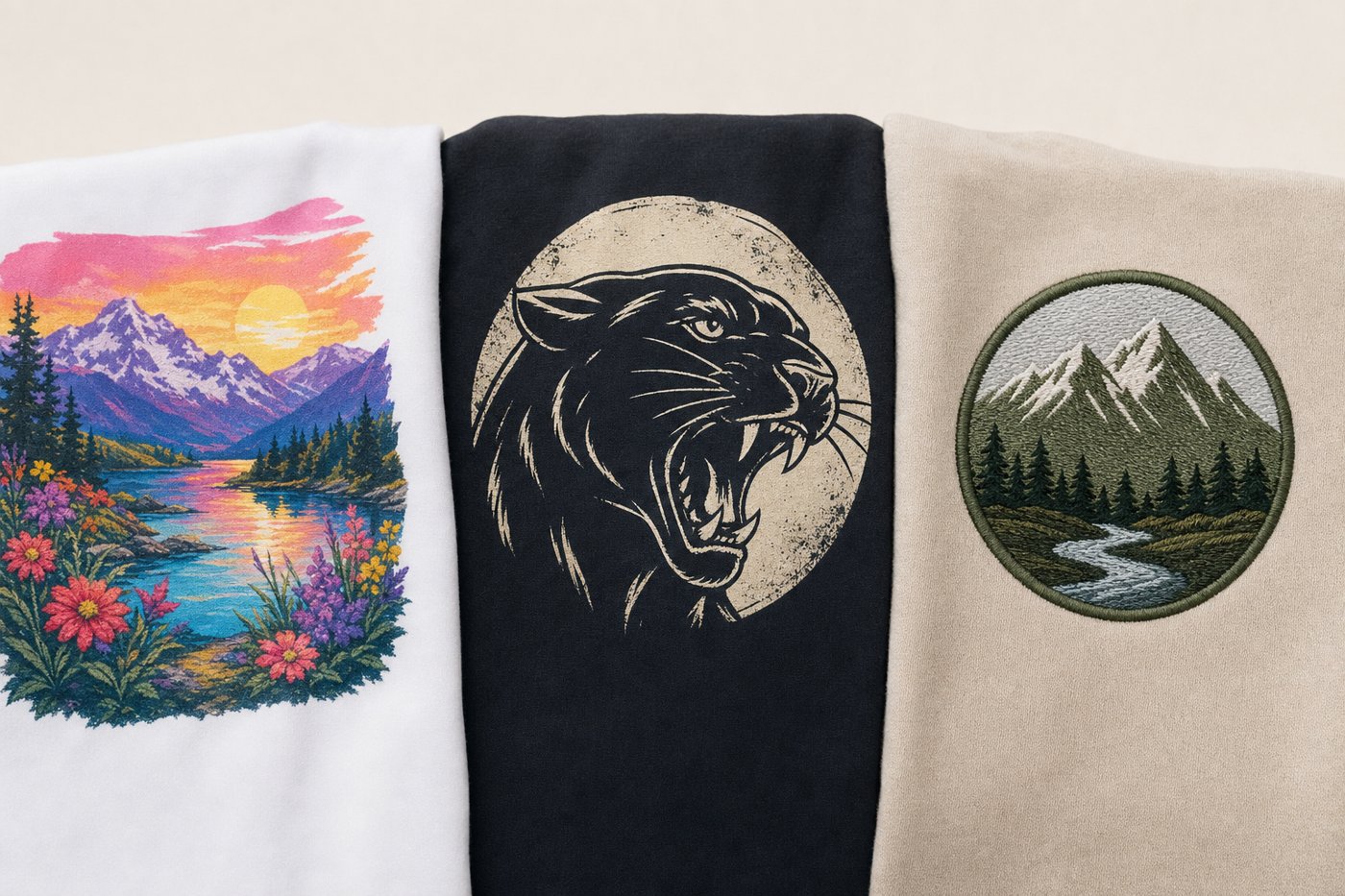
DTF (direct-to-film) prints your full-colour design onto a special film, which is then heat-pressed onto the garment. It handles fine detail and unlimited colours, and the finish is soft and durable, lasting 50 or more washes when cared for properly.
- Best for: detailed or photographic designs, gradients, lots of colours.
- Run size: great for small to mid-size orders.
- Fabrics: works on most fabrics and garment colours.
Screen printing
Screen printing pushes ink through a stencil, one colour at a time. There's setup per colour, so it's most cost-effective once you're printing in volume with a simple design.
- Best for: bold designs with one to three colours.
- Run size: the cheapest option per unit on large runs.
- Finish: bold and long-lasting.
Embroidery
Embroidery stitches your logo into the fabric with thread. It gives a textured, premium look that survives wash after wash, which is why it's the go-to for corporate wear.
- Best for: logos and emblems, not large detailed artwork.
- Garments: golf shirts, caps, jackets and workwear.
- Finish: premium and very durable.
So which should you choose?
If you have a detailed, colourful design, go DTF. If you're printing a big run of a simple design and price matters most, screen printing wins. If you want a smart logo on golf shirts or caps, choose embroidery. Not sure? Send us your design and we'll recommend the best fit.
FAQs
Can you mix methods on one order?
Yes. It's common to embroider the golf shirts and DTF-print the t-shirts in the same order. We'll quote each line accordingly.
Which method lasts the longest?
Embroidery and screen printing are both extremely durable. Quality DTF also lasts well through regular washing when cared for properly.
Do I need a special file?
A clear PNG, PDF or vector works best. Send what you have and we'll tell you if it needs tidying up before printing.